Optimizing PBT Powder Processing in SLS with SnowWhite2 HT
This report analyzes the Selective Laser Sintering (SLS) performance of ROWALIT PBT 01-1 (Polybutylene Terephthalate) on the Sharebot SnowWhite2 HT 3D printer. The study establishes a critical thermal processing window between 165°C and 170°C and optimizes laser energy density at 25% power. Key research focuses on powder rheology, specifically addressing layer compaction and density gradients that affect edge definition. This documentation provides a benchmark for high-performance polymer additive manufacturing and material science R&D.
Dive deeper into the data. Contact us to receive the full technical report for free.
Advancing high-performance polymers in SLS
At Sharebot, we believe that hardware is only as good as the materials it can master. Our R&D department has recently pushed the SnowWhite2 HT to its limits by testing ROWALIT PBT 01-1, a high-performance PBT powder known for its thermal and chemical resistance.
The goal? To move beyond “standard” materials and unlock industrial-grade capabilities for our users.
The experiment: finding the "Sweet Spot"
Precision is everything in SLS. Even a few degrees can make the difference between a perfect part and a warped slab of plastic. Our testing involved a systematic sweep of temperatures and laser intensities to map the material’s behavior.
The Thermal Window: We discovered that PBT is particularly sensitive. A bed temperature of 165°C–170°C is the “Goldilocks zone.” Go below 160°C, and the material warps; go above 180°C, and you’re looking at localized melting that ruins part geometry.
Laser Tuning: While 23% power was our baseline, bumping the intensity to 25% proved to be the winning move, significantly enhancing surface fusion and part density.
The challenge: powder flow vs. physics
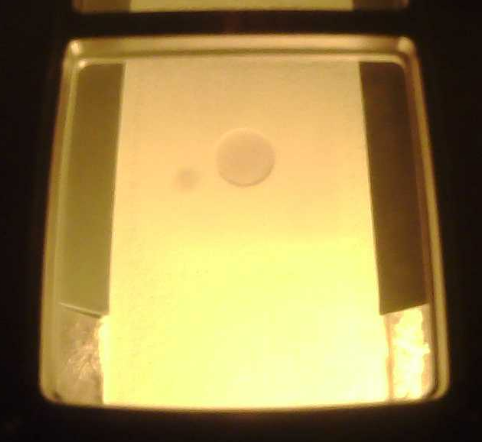
Engineering is rarely without its hurdles. During multilayer testing of 20mm cylinders, we encountered an interesting phenomenon: inconsistent edge quality on the side opposite the recoater’s path.
After diving into the machine logs and analyzing the surface finish, we identified the culprit: Powder Rheology. The PBT particles tend to compact during the spreading phase, creating tiny “bubbles” or density variations in the bed. It wasn’t a laser problem; it was a mechanical flow challenge. This gradient in powder density leads to uneven sintering at the edges of the part.
The path forward: material innovation
The data doesn’t lie, and it tells us that the “hardware” side of the equation is ready. The next evolution lies in the material itself. We are now investigating the addition of flow agents to the PBT powder. By reducing inter-particle friction, we aim to ensure a perfectly homogeneous layer every single time, eliminating compaction issues.
At Sharebot, we don’t just sell printers—we solve the puzzles of 3D printing.
Get the Full Report.
Click here to contact us and receive the complete PBT processing guide for free.